Fleet Battle - Sea Battle
- 4.6
- Rating
- 10.00M
- Installs
- Free
- Price
 Analysis by App-foxy
I spent time with Fleet Battle - Sea Battle as a casual board game, and its appeal is easy to understand: it turns the familiar hunt for hidden ships into something you can play against another person online or enjoy without an internet connection. That basic idea is not new, but the presentation makes it convenient when I want a short strategy session rather than a large, complicated game.
The game comes from smuttlewerk interactive and is listed as free to download. It has reached over ten million installs, with an average rating of 4.6 from around 220 thousand ratings. Those numbers suggest that it has found a broad audience, but they do not mean it will suit every player. The important question is whether you enjoy guessing, probability, and small tactical decisions more than elaborate board-game systems.
How Fleet Battle feels in everyday play
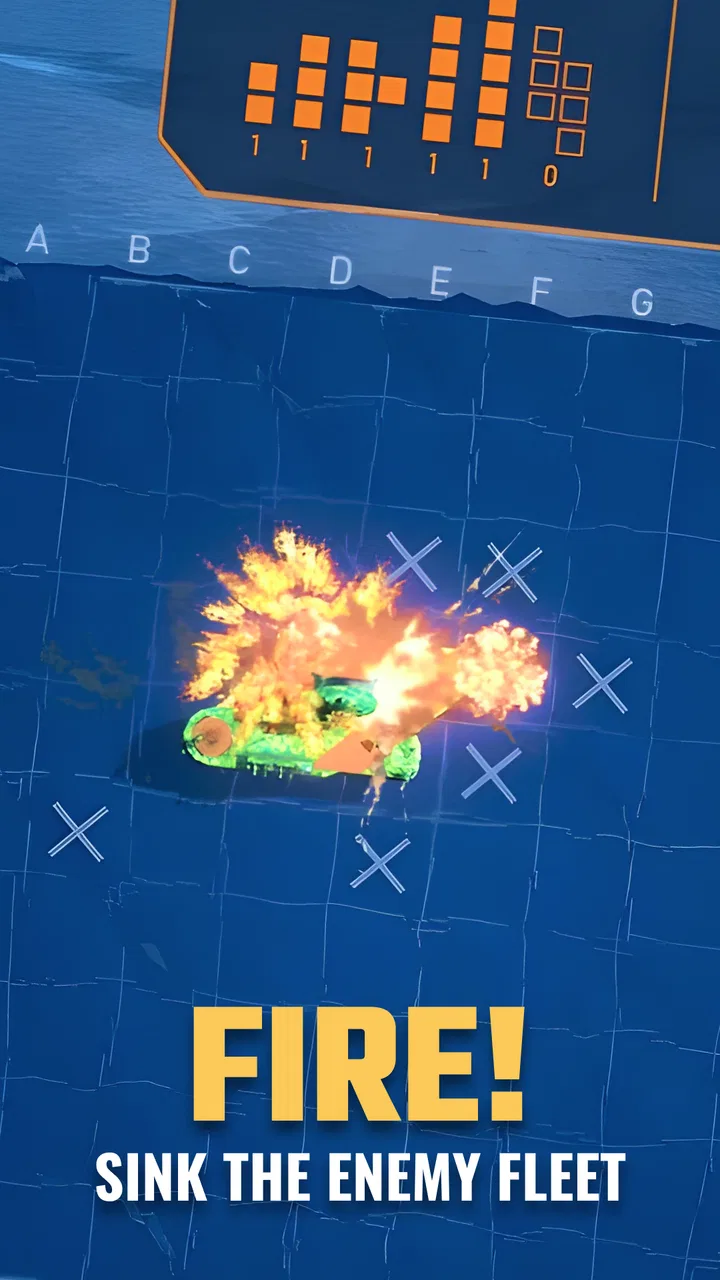
The central experience is a digital version of the classic battleship format. You place or manage a fleet, then try to locate the opposing ships on a concealed grid. Each turn asks you to make a choice with incomplete information. A hit gives you a clue, but the next useful shot still depends on how well you interpret the pattern and how patiently you search.
You May Also Like

 Pandora - Music & Podcasts
Pandora’s Music Is Easy to Start, but Harder to Recover
Pandora’s strength is its low-effort path from a seed to a station. Its weak spot is how much confidence it asks you to place in connection, setup, and quiet recovery.

 AccuWeather: Weather Radar
AccuWeather Review: A Quick, Clear Forecast for Everyday Decisions
For everyday plans, the best forecast is the one you can understand quickly. AccuWeather makes rain timing, radar, and local conditions easy to act on, with a few trade-offs.

 Hill Climb Racing
Why Hill Climb Racing Still Turns Crashes Into One More Run
A tiny car, a bumpy hill and one more upgrade: Hill Climb Racing keeps resurfacing because its simple chaos makes every near-miss feel personal.

 AliExpress - Shopping App
AliExpress Makes Global Shopping Feel Personal, but Shoppers Bear the Risk
AliExpress turns a global marketplace into a pocket-sized discovery engine. Its reach is useful, its shopping loop compelling, and its trade-offs easy to miss.

 Lords Mobile: Kingdom Wars
Lords Mobile Is a Kingdom-Building Routine, Not a Quick Match
A case-by-case verdict on the building, battles, device demands, and social commitments that make Lords Mobile rewarding for some players and exhausting for others.

 PDF Scanner app - TapScanner
TapScanner Makes Paperwork Easier to Capture, Check, and Share
TapScanner makes scanning with a phone feel less like a rescue operation and more like a dependable step in getting work done. Its capture tools are useful, though not flawless.
More From Our News Desk
View All News


I like that the rules are immediately approachable. Someone who has played the physical game can understand the purpose of the screen almost at once, while a newcomer does not need to study a long tutorial before making a first move. That makes it a good choice for a quick break, a family game, or a rematch with a friend who does not normally play mobile strategy games.
At the same time, the simplicity is both the attraction and the limitation. This is not a naval simulation, a campaign-heavy tactics game, or a deep tabletop adaptation with many layers of progression. The pleasure comes from reading the board, managing uncertainty, and occasionally outthinking the other side. If you need a large amount of content or a constantly changing set of rules, the format may feel narrow.
The online and offline options are especially useful in different situations. Online play gives the game a more competitive reason to return to, while offline play makes it suitable for travel, waiting rooms, or places where connectivity is unreliable. I would not treat those modes as interchangeable: playing a person can create more memorable mind games, whereas offline sessions are better when I simply want a self-contained diversion.
What the free price really means
The download itself is free, which lowers the risk of trying it. You can install it, learn the basic rhythm, and decide whether the battleship format still holds your attention without paying at the door. That is the clearest part of the value proposition, especially for households that want a board-style game available without committing to a purchase.
There are in-app purchases ranging from $0.99 to $24.99 per item. I would therefore separate free access from paid value. The free entry point lets you judge the core experience first, but anyone considering optional spending should decide whether the additional convenience or content is genuinely useful to them rather than assuming that a purchase is necessary.
Because the game is built around a straightforward board concept, I would be cautious about spending heavily before playing enough free sessions to know that the format has staying power for you. A small purchase may feel reasonable if you play regularly, but a larger item deserves more thought when the basic rules are intentionally simple. The free version is the sensible starting point; paid value depends on how often you return and what each optional item adds to your personal routine.
That distinction matters more here than it would in a large role-playing game. A complex game can justify spending through a wide campaign or a deep collection system. Fleet Battle is valuable when it gives you quick, repeatable matches and convenient access to opponents. If your interest is only occasional nostalgia, free access may be all you need.
Small decisions that make the game more interesting
The obvious mistake is to fire randomly across the entire board once the first few shots miss. I get better results by treating empty spaces as information. After a miss, I mentally reduce the likely locations around it and keep my search pattern deliberate instead of reacting emotionally. This sounds basic, but it prevents a surprising amount of wasted guessing during close games.
When I score a hit, I do not immediately jump to a distant square. I test nearby positions to establish the direction of the ship, then continue along that line until the information stops making sense. The useful insight is that a hit is not only progress toward sinking one vessel; it also tells me how to organize the next several turns. Rushing away from that clue often gives the opponent time to recover.
Another practical habit is to separate the opening from the endgame. Early shots are about gathering information and covering the board efficiently. Later shots should be guided by the remaining spaces and by the ship shapes I have already inferred. Using the same random-looking pattern throughout wastes the advantage gained from earlier hits.
For offline sessions, I prefer short personal challenges rather than playing indefinitely. I might focus on improving my opening search or on making fewer speculative shots. That gives a simple match a purpose and helps the game feel less repetitive. Without that self-imposed goal, the board can become a loop of similar guesses, especially for experienced players.
Online matches have a different rhythm. A human opponent may deliberately avoid predictable placement or may react to your habits. I find it useful not to copy the same opening arrangement every time. Varying the setup is a small but meaningful way to avoid becoming easy to read, even though the underlying rules remain familiar.
Where it compares well with physical and digital alternatives
Compared with the traditional physical board game, the mobile version is more convenient. There are no loose pegs to arrange, no need to find a table, and no separate opponent sitting beside me if I choose online play. The device handles the board state, which is valuable when I want to start a match immediately or play while traveling.
The physical version still has an advantage in social atmosphere. Sitting across from another person creates pauses, reactions, and conversation that a phone screen cannot fully reproduce. If the main goal is a family activity away from devices, the tabletop set remains the better choice. Fleet Battle is strongest when convenience matters more than the tactile experience.
Compared with larger strategy board games on mobile, this one is much easier to enter. I do not need to learn multiple resources, complicated phases, or a long-term economy. That makes it suitable for people who enjoy tactical guessing but dislike rules-heavy games. The trade-off is that a larger digital board game may offer more varied scenarios, stronger progression, or a richer sense of discovery.
It also differs from fast arcade games. The tension comes from thinking rather than reflexes, so it works well when I want to slow down and make considered choices. On the other hand, anyone looking for constant action, visual spectacle, or rapid rewards may find the turns too quiet. The game asks for patience, and that is part of its identity rather than a flaw that can be removed.
Who is most likely to get good value
I would recommend it to players who enjoy classic board rules, hidden information, and short strategic exchanges. It is particularly approachable for someone who wants to try a competitive game without learning an intimidating system. The Everyone 10+ rating also places it in a broadly accessible range, although younger players may still need help understanding why careful searching is more effective than random shots.
It is a practical choice for a few specific situations. I can imagine using it during a commute when I want an offline distraction, handing it to a family member who already knows battleship, or starting an online match when friends want something less demanding than a full multiplayer strategy title. The ability to switch between connected and offline play gives it more everyday flexibility than a game dependent on one mode.
It may also suit people who like replaying a familiar puzzle from different angles. The board is simple, but the hidden arrangements create enough uncertainty to make each match feel slightly different. Players who enjoy calculating possibilities, remembering patterns, and taking measured risks will probably find more depth here than someone who only sees a guessing game.
I would be less enthusiastic for players who need a strong solo campaign, a large variety of maps, or a story to motivate continued play. The basic naval theme is a setting for the board rather than a promise of a detailed adventure. Similarly, if you dislike losing because the information available to you is incomplete, the central tension may feel frustrating instead of exciting.
Limitations worth considering before installing
The biggest limitation is repetition. Once the rules become familiar, much of the challenge comes from your opponent and your own discipline rather than from new mechanics. That can be satisfying for a traditionalist, but it can also make the game feel modest beside modern board apps that constantly introduce new scenarios or systems.
The free-to-download model also means I would pay attention to how optional purchases fit your habits. Since items can cost as much as $24.99 individually, I would not assume every purchase offers good value for every player. The right approach is to play first, identify what you actually use, and avoid paying simply because an item is available.
The game’s age is another point to keep in mind. It was released on August 1, 2013, so I approach it as an established version of a classic concept rather than a new release built around current mobile trends. That is not automatically negative: mature games can be easy to understand and dependable. It does mean players seeking the newest presentation or the most experimental design should keep their expectations realistic.
The current version is 2.1.957, and the listed minimum operating-system requirement is 7.1. That makes it potentially accessible on older supported devices, which is useful if you are installing a lightweight board game on a phone that is not new. Still, device compatibility is only one part of the decision; the more important question is whether the deliberately focused gameplay matches your taste.
Another trade-off is the difference between playing against a person and playing alone. Human opponents can make the game unpredictable and rewarding, but the quality of a competitive session depends on the opponent’s patience and style. Offline play is more dependable for a quick break, yet it may not provide the same psychological tension. I see the two modes as complementary rather than expecting one to replace the other.
My recommendation for different kinds of players
If you have not played a digital battleship game before, I would install it and begin without spending money. Use the first sessions to learn how quickly you adapt to the search process. Try a few different fleet arrangements, notice whether you enjoy interpreting hits, and see whether offline play is enough for your needs.
If you already love the physical board game, the app is worth considering as a convenient second format. It will not replace the atmosphere of playing across a table, but it can keep the game available when there is no set nearby. The online option is the stronger reason to choose the app over simply buying or borrowing a physical copy, while offline play makes it more versatile than a purely connected experience.
If you are an experienced mobile strategy player, I would frame it as a compact side game rather than your main title. It is good for filling short gaps and for enjoying a clean tactical puzzle, but it probably will not satisfy a desire for a long progression system. A more elaborate board adaptation would be a better investment of time if you want campaigns, multiple mechanics, or extensive customization.
For parents or relatives choosing something approachable, the familiar rules are an advantage. You can explain the objective quickly, and a child or casual player can begin making meaningful decisions early. I would still play together at first, because the best lessons are practical: how to use a hit, why random firing is inefficient, and how to change placement instead of repeating the same setup.
My verdict is to try it for free, but to treat purchases as optional rather than automatic. Fleet Battle - Sea Battle delivers a focused version of a proven board idea, with online and offline flexibility that makes it easy to fit into ordinary downtime. Its 4.6 average and broad install history show that many players have found the format appealing, but its value is personal: regular fans of hidden-grid strategy will get the most from it, while players seeking a deep modern board-game experience should skip it or choose something more expansive.
After playing it, I see the game as a dependable compact diversion rather than an all-purpose strategy platform. I would keep it available for travel, quick rematches, and relaxed sessions with someone who already enjoys battleship. I would skip a purchase until I had established a regular habit, and I would skip the game entirely if the classic rules already feel too repetitive. For the right player, that simplicity is exactly what makes it useful.
FAQs for Fleet Battle - Sea Battle
01What is Fleet Battle - Sea Battle about?
Fleet Battle - Sea Battle is a mobile game that brings the classic naval combat experience to your Android or iOS device. Players can engage in strategic battles, placing their ships on a grid and trying to sink their opponent's fleet by guessing the locations of their ships. It's an engaging mix of strategy and luck, reminiscent of the traditional Battleship game.
02Is Fleet Battle - Sea Battle free to play?
Yes, Fleet Battle - Sea Battle is free to download and play. However, the game includes in-app purchases that allow players to buy additional features, such as new ship designs, game modes, or ad-free experiences. While not necessary for gameplay, these purchases can enhance the overall experience.
03Can I play Fleet Battle - Sea Battle offline?
Fleet Battle - Sea Battle offers both offline and online gameplay modes. In offline mode, you can play against AI opponents, making it perfect for times when you don't have an internet connection. The online mode allows you to compete against other players worldwide, providing a more challenging experience.
04What are the system requirements for Fleet Battle - Sea Battle?
For Android devices, Fleet Battle - Sea Battle requires Android version 4.1 and up. For iOS users, the game is compatible with iOS 9.0 or later. It's optimized for both phones and tablets, but performance may vary depending on your device's specifications. Ensure your device meets these requirements for the best gameplay experience.
05How can I improve my skills in Fleet Battle - Sea Battle?
Improving your skills in Fleet Battle - Sea Battle involves practice and strategic thinking. Try different ship placements to confuse opponents and study the patterns of successful players. Engage in both offline and online battles to refine your tactics. Additionally, exploring online forums and tutorials can provide valuable tips and strategies to enhance your gameplay.
Pros
- Simple and intuitive controls.
- Engaging multiplayer mode.
- Visually appealing graphics.
- Quick matchmaking process.
- Customizable fleet options.
Cons
- Limited single-player content.
- Occasional server lag.
- Ads can be intrusive.
- Lacks advanced strategy elements.
- In-app purchases can be pricey.

Fleet Battle - Sea Battle
Gallery